
Starch-derived absorbent for light incontinence pads
Company HQ: NAGASE · Japan ↗
NAGASE · Material development
NAGASE describes a starch-derived biodegradable superabsorbent polymer designed for light incontinence pads.
03 / Materials
Start with the layers and materials of absorbent products. Then follow original sources to products and packaging, manufacturing and equipment, and collection and recycling.
Explore companies by the region of their headquarters.
Research, public-sector sources and items without confirmed headquarters remain under All. References are not filtered.
A material atlas
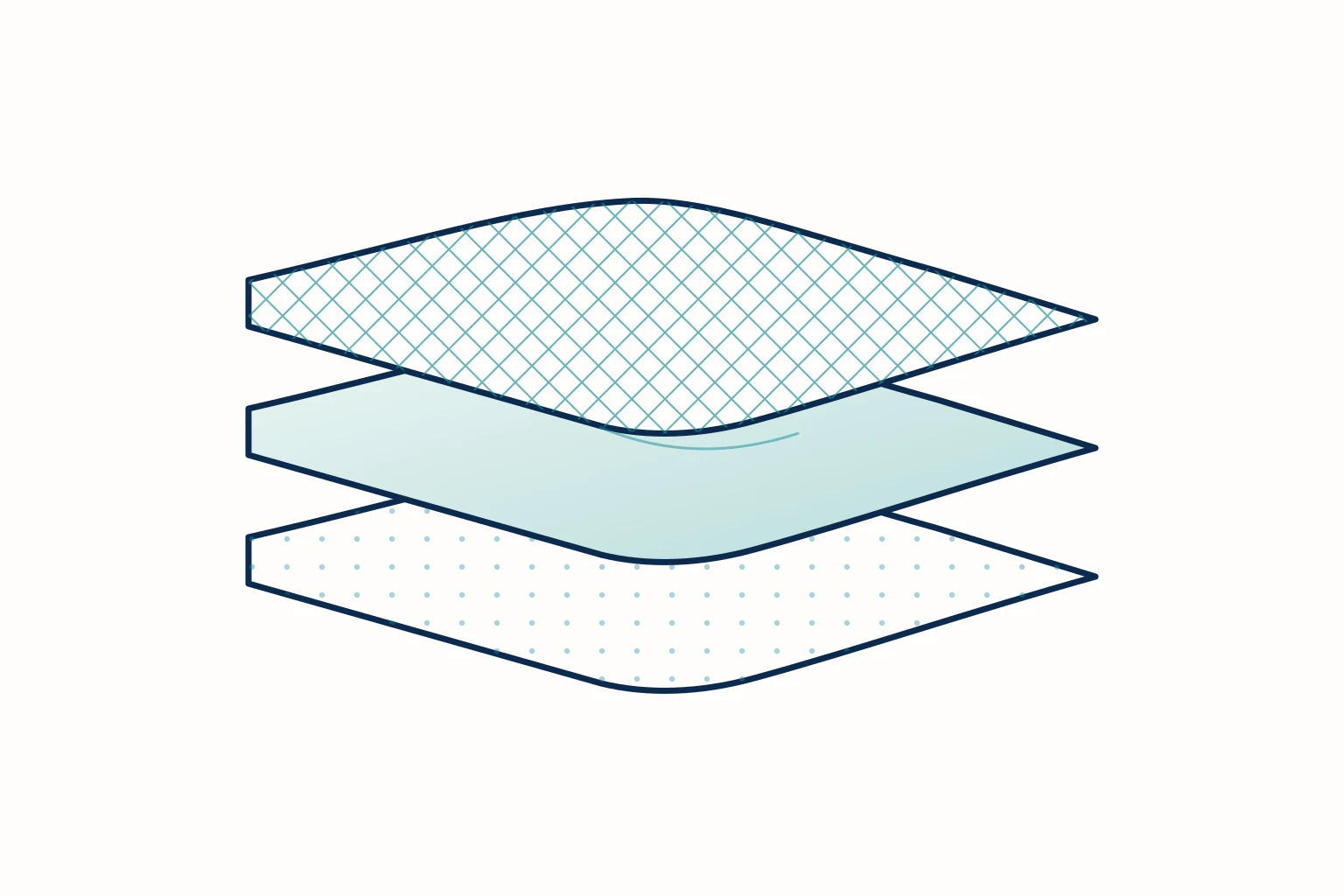
The illustration is a simplified guide. Materials and construction differ between products.
Common material roles
Raw materials
4 articles · 1 source link
Company HQ: NAGASE · Japan ↗
NAGASE · Material development
NAGASE describes a starch-derived biodegradable superabsorbent polymer designed for light incontinence pads.
Company HQ: Nippon Shokubai · Japan ↗
Nippon Shokubai · Supply certification · Company-published source
Nippon Shokubai announced on June 26, 2025 that US group companies had obtained ISCC PLUS certification for…
Company HQ: Nippon Shokubai · Japan ↗
Nippon Shokubai · Certified material supply · Company-published source
Nippon Shokubai announced on May 29, 2024 that its Indonesian subsidiary had begun manufacturing and…
Products & packaging
10 articles · 1 brief · 2 source links
Company HQ: Confitex · New Zealand ↗
www.prnewswire.com · Product description · Company-published source
Confitex Technology announced on September 15, 2026, that its washable nonwoven absorbent hygiene products…
Company HQ: Night n Day · Australia ↗
www.continence.org.au · Manufacturer interview · Organization source
Continence Health Australia interviewed Michael Lakiss-Smith, managing director of the Australian family…
Company HQ: Unicharm · Japan ↗
www.unicharm.co.jp · Product announcement · Company-published source
Unicharm announced Lifree Overnight Dry Pad SkinCondition Comfort Night on June 18, 2026, for a mid-June…
Manufacturing & equipment
4 articles · 3 briefs
Company HQ: Excellent Medical Technology Group · China ↗
Jiangsu Excellent Medical Technology Group / Beijing Stock Exchange disclosure · Construction start and plan · Company-published source
Jiangsu Excellent Medical Technology Group disclosed on May 25, 2026 that its Moroccan manufacturing project…
Company HQ: Woolchemy · New Zealand ↗ / BCNonwovens · Spain ↗
www.woolchemy.com · Collaboration after a trial · Company-published source
The partners will advance customer trials and commercial evaluations for wool-based hygiene components before…
Company HQ: Nippon Shokubai · Japan ↗
Nippon Shokubai · Construction start and plan · Company-published source
Nippon Shokubai announced on August 8, 2025 that its Indonesian subsidiary had held a groundbreaking ceremony…
Collection & recycling
5 articles · 1 source link
Company HQ: Sumitomo Seika · Japan ↗
Sumitomo Seika · Pilot · Company-published source
Sumitomo Seika announced on June 15, 2026 that a pilot plant for recycling superabsorbent polymer recovered…
Company HQ: Unicharm · Japan ↗
Unicharm · Implementation report
Unicharm reviews its RefF recycling program, including an adult-care product introduced for care facilities…
Company HQ: Unicharm · Japan ↗
www.unicharm.co.jp · Research and development · Company-published source
Unicharm announced on December 9, 2025, that it had begun developing a dry-washing process for recycling used…
Manufacturing equipment
Explore equipment companies for adult diapers and incontinence products, with product areas and official sources.
A claim about one material or life-cycle stage does not describe the environmental impact of the whole product. These examples are selected routes to original information, not a ranking or a claim that a product is environmentally preferable. Company statements are attributed to their publishers.